Last Week's Links

Literary Links

Sympathy for the De Vil: Reading Beyond Likability “As a writer and enthusiastic consumer of unlikable characters, I’m often puzzled by viewers or readers who criticize a story for having these types of characters,” writes novelist and English teacher John Copenhaver. This is a topic that just won’t go away. I Don’t Read to Like […]

Literary Links Read More »

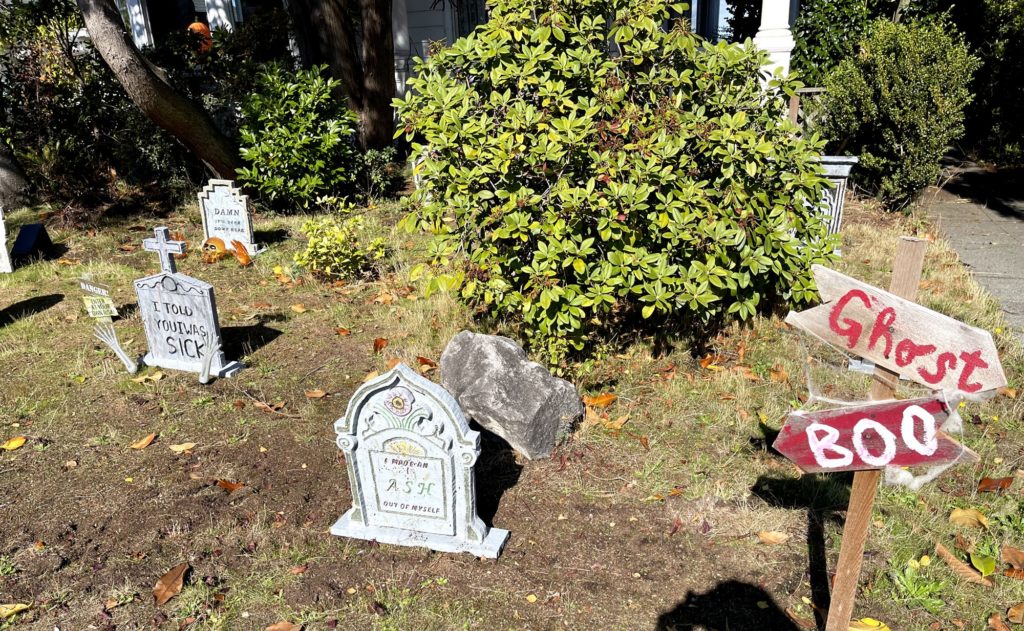
Front yard decorated to look like a grave yard, with fake head stones and signs that read "Ghost" and "Boo."

Happy Halloween!

Why do we read scary books? “We’re a peculiar lot, when you think about it: we work so hard to make our world, our environment safer… and then we actively seek out things that will make us afraid. Horror movies, urban legends, ghost stories. We hunt down the darkness and we revel in it. Why?

Happy Halloween! Read More »

Last Week's Links

Literary Links

The Book Review Turns 125 The New York Times is celebrating the 125th anniversary of its Book Review with a selection from its archives. Here you’ll find links to reviews of past books including The Woman Warrior by Maxine Hong Kingston, Roots by Alex Haley, and The Bell Jar by Sylvia Plath, as well as

Literary Links Read More »

The New Yorker

Dear Subscriber, On Friday, the latest film by Wes Anderson, “The French Dispatch,” arrives in theatres across the U.S. Starring Bill Murray, Frances McDormand, Timothée Chalamet, and more, the movie follows the staff of its namesake magazine as they produce an issue—a publication based largely on the mid-century New Yorker. From the beginning, the real-life

The New Yorker Read More »

stack of books and open notebook. Label: Quotation

Quotation: “How We Write Mental Illness in Fiction”

“Mental illness is less a disease of the mind and more of a societal blindness. Reading fiction opens our eyes to other people’s way of viewing the world. As a reader, there have been magical moments that I have felt the soul of someone I’ve never met has seen me. As a writer, it is

Quotation: “How We Write Mental Illness in Fiction” Read More »

Carmen Mola: Lauded Spanish female crime writer revealed to be 3 men – CNN

Spain’s literary world has been thrown into chaos after a coveted book prize was given to “Carmen Mola” — a lauded female thriller writer who turned out to be the pseudonym of three men. Source: Carmen Mola: Lauded Spanish female crime writer revealed to be 3 men – CNN I found this oddly appropriate, since

Carmen Mola: Lauded Spanish female crime writer revealed to be 3 men – CNN Read More »

Last Week's Links

Literary Links

The great book shortage of 2021, explained Those exhortations you’ve heard about ordering holiday gifts early include books. My daughter reminded me just a couple of days ago to get my book requests to her soon. In defence of memoirs – a way to grip our story-shaped lives After studying life stories and their nonfiction

Literary Links Read More »

Last Week's Links

Literary Links

How the Clique Books Taught Me to Hate Other Girls and Myself “I thought these middle-grade novels would help me navigate private school. Instead, they immersed me in bullying and materialism.” Anyone who doesn’t believe how much literature can influence people could benefit from reading Lena Wilson’s account of how she was influenced by “the

Literary Links Read More »

Last Week's Links

Literary Links

All Our Possible Lives: On Sylvia Plath, Matt Haig, and the Female Suicide Narrative “Savannah Marciezyk Compares Textual Interpretations of The Midnight Library and The Bell Jar” Sylvia Plath and Matt Haig have much in common, but the differences between their receptions and textual interpretations are remarkable. Plath’s novel is famously (and controversially) autobiographical. Haig

Literary Links Read More »

book covers: The Lottery, We Have Always Lived in the Castle, The Haunting of Hill House, Mrs. March, The Yellow Wallpaper, Deep Water, The Butcher Boy

6 Degrees of Separation: Deranged Minds

This month we start with “a (frightening) short story,” “The Lottery” by Shirley Jackson. This is probably the story Jackson is best known for. It appeared in The New Yorker in 1948. What I love about Shirley Jackson’s work is the way she gradually makes the reader realize that things are not always what they

6 Degrees of Separation: Deranged Minds Read More »

Scroll to Top