
The Rise of Literary Tourism
“Explore the rise of literary tourism worldwide and how book lovers are traveling to iconic literary destinations.”
Adam Ryan looks at the various ways that readers are incorporating literary destinations into their traveling plans.
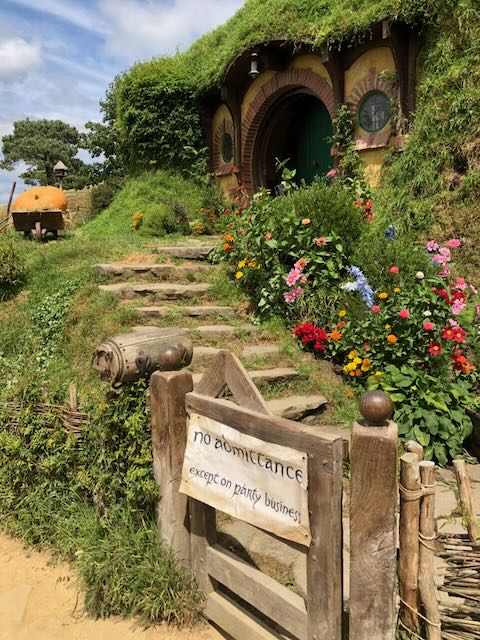
While I’ve never planned a trip explicitly around a literary destination, I try to include literary-related locations or themes when traveling. A couple of my best experiences were visiting the Shire at Hobbiton in New Zealand, where Peter Jackson’s The Lord of the Rings movies were shot, and touring the newly refurbished Henrik Ibsen Museum in Oslo, Norway.
![Outside of building with sign "Ibsen Museum & Teater[sic]"](https://www.notesinthemargin.org/wp-content/uploads/2025/09/Ibsen-Museum.jpeg)
The Books We Read Too Late—And That You Should Read Now
“One of the great, bittersweet pleasures of life is finishing a title and thinking about how it might have affected you—if only you’d found it sooner.”
Here’s a list of seven novels that staff members of The Atlantic “wish they’d read when they were younger.”
The Best Debut Novel of 2026
Barnes & Noble has announced the winner of its 2026 Discover Prize for the year’s best debut novel: Seek Immediate Shelter by Vincent Yu.
I haven’t read the book, but the timing of this announcement strikes me as odd. There’s still almost a half year during which, I expect, several more debut novels will be published. Of course, Barnes & Noble can name its award whatever it wants, but calling something the best of 2026 when 2026 is only half over doesn’t make much sense.
The Literary Genre That Thrives in Hard Times
“Jordan Harper’s new novel proves noir can still channel the crises and neuroses of the moment.”
Carolyn Kellogg, former books editor for the Los Angeles Times, discusses how Jordan Harper’s new novel, A Violent Masterpiece, updates the genre of noir literature that has characterized Los Angeles since the 1930s.
“Noir thrives on style, on sensibility, and on situated-ness,” Kellogg writes. “Harper and his Angeleno peers show how noir in any setting can work in this century, a time of rampant corruption, outsize villains, and morality turned inside out.”
Creating a Writing Routine That Works for You
I’m a big believer that the difference between all the people out there who say they “have an idea for a book” and “want to write a book” someday, and those of us who write and publish books, is finding a writing routine that works for you, sticking with it, making the time to write, and instead of just thinking about the book, sitting down and writing that world into reality on the page. Julia Cameron’s The Artist’s Way, which was first published in 1992, is having a resurgence of popularity right now across social media.
Writer Sassafras Patterdale explains the writing process Cameron presents in The Artist’s Way and why its routine worked for her.
The End of Reading Is Here
“Optimists once believed that universal literacy was inevitable. Now it seems that the age of reading might be a short anomaly in human history.”
Americans, once members of a proudly literate society, read much less than they used to. . . . Gambling has become a more common leisure activity than reading a book: Last year, 57 percent of Americans placed a bet.
It’s not unusual to come across articles lamenting the statistics indicative of the decline in reading. In this lengthy and well researched article Rose Horowitch, a staff writer for The Atlantic, goes beyond the data-driven approach to consider the significance of literacy within the context of global history.
After discussing the differences between oral and written communication, Horowitch concludes that “people are losing the ability to think deeply about writing. . . . they are losing the higher-order abilities of comprehension and synthesis. America, in other words, isn’t illiterate. It’s postliterate.”
And the current state of literacy doesn’t affect just the number of volumes bookstores can sell. The results will have much greater significance:
The decline of reading . . . will affect our innermost thoughts, our society’s politics and culture, and how we tell the history of our civilization. If we look closely, we can see that these changes have already begun.
You’re Not a Therapist. Stop Talking Like One
“Please respect everyone else’s boundaries by keeping your psychobabble to yourself.”
Although I appreciate the psychological aspects of fiction, I prefer that authors not slip into the laziness of psychological labels instead of well developed characterization.
In this article Hillary Busis, a features writer for Vanity Fair, bemoans the same tendency in contemporary speech, therapyspeak, “the mealymouthed argot of a million self-assured TikTokers . . . , confidently declaimed pseudo-psychology.”
Punctuation: A Generational Divide
“Can parents ever learn to text like their kids? Should they even try?”
The first time I texted my daughter “Where R U?” she returned “OMG, I can’t believe you just wrote that!” She’d lived something like 40 years with her mother’s, the former English comp teacher’s, insistence that she write correctly, in full sentences with standard spelling and punctuation.
Judith Shulevitz, a staff writer for The Atlantic, refers to similar conversations with her son, “the family authority on punctuation . . . [whose] expertise lies in using it in texts and on social media, where commas and periods go to die.” Along the way Shulevitz discusses the book On the Mark: From Periods to Interrobangs, How Punctuation Remade the World by Florence Hazrat.
Grammar nerds, rejoice!
© 2026 by Mary Daniels Brown
