

Definition: Novella
Novella is an indeterminate designation, defined loosely as a work of fiction longer than a short story but shorter than a novel. The most commonly given lengths are 15,000-80,000 words or 70-160 pages, though these numbers are always given with the caveat that they are approximate. The number of pages, especially, can vary on the basis of font, print size, and line spacing.
Perhaps a more helpful guideline is to think of focus rather than word count. While a short story often focuses on a single character, a novella may incorporate a small number of focus characters. Also, the setting of a novella is often restricted to a small geographical area, in contrast to novels, which may range all over the world or even the universe. However, these also are only generalizations that should be understood as guidelines rather than strict rules.
I’m a slow reader, so I usually don’t worry about whether a fictional work is called a novella or a novel; I’m more concerned with how long it takes me to read a particular book. One of my favorite categories of fiction is “books I can read in a day,” and for me that usually turns out to be anything up to 200 pages.
With that page count in mind, here are two short works of fiction I’ve read recently to which I give my highest rating. Both are firmly rooted in the minds of their main character.


Seascraper by Benjamin Wood
- Penguin, 2025
- Kindle ed., 176 pages
- ISBN 978-1-40-597508-7
This book is set on the coast of England, but most of it takes place in the mind of 20-year-old Thomas Flett. Thomas is a shanker, someone who scrapes the beach during low tide to pick up whatever shrimp the retreating water has left behind. He learned his trade from his maternal grandfather, Pop. Thomas is proud to carry on this family tradition but knows that it’s a dying trade now that most shrimpers use boats.
And then what will Thomas have to look forward to?
The reader learns Thomas’s backstory early on. His mother got pregnant, at age 15, by her teacher, bringing shame on the family. Thomas was raised by his mother and her father, Pop, now dead. Thomas and his mother don’t talk much. Every day is the same as the one before, with the two of them exchanging only the most meager conversation:
Their life is just a mindless trudge of work with cosy patterns of behaviour in between – he’s always known this, overlooked it for the sake of their togetherness, survival. But he cannot stand to watch her keeping up the normal circulation of their days. He wants to wake up every morning with a better purpose. (p. 54)
As is often the case in such pared-down works of fiction, the catalyst for action arrives in the person of a stranger: Edgar Acheson, who is looking for a location that provides an appropriate setting for a film he plans to make. Through the early-morning fog, Edgar catches sight of Thomas out working with his rig. Edgar approaches Thomas and arranges to accompany Thomas on his run the following morning.
Meeting Edgar Acheson opens up a world of possibilities for Thomas. As an example that there are men out in the larger world who have dreams that they pursue, Edgar reinforces some truths Thomas has begun to suspect:
. . . these past few years, he’s come to understand: he settled for too little. Everything he puts his mind to when he isn’t on the beach – rehearsing songs on his guitar and rearranging them – that’s when he feels most alive, that’s when he’s at his best. (p. 11)
Emboldened by Edgar’s example, Thomas finally dares to ask his mother about his father. He’s surprised by her willingness to talk about his father and realizes that she, too, had dreams and plans about life. As a result of talking to his mother about the past, Thomas begins to think about what possibilities the future might offer him:
One way or another, he’ll be dead before he’s twenty-one if he keeps shanking with a cart out here. He’s scratching up a living every day and something has to change. . . . He needs to reconcile the things he wants with what he’s able to achieve, and work out if this life that he’s inherited from Pop is worth bestowing when he’s finished. Who will he bestow it to, at any rate? There’s no one in the queue behind him. He’s been closer to the grave than he has ever been to marriage. He can’t even tell Joan Wyeth that he likes her. (pp. 118-119)
This coming-of-age realization suggests that Thomas is on the verge of changing his life story to effect change in his future life.
© 2026 by Mary Daniels Brown

You Must Remember This by Sean Wilson
- Affirm Press, 2025
- Kindle ed., 152 pages
- ISBN 978-1-92-329338-0
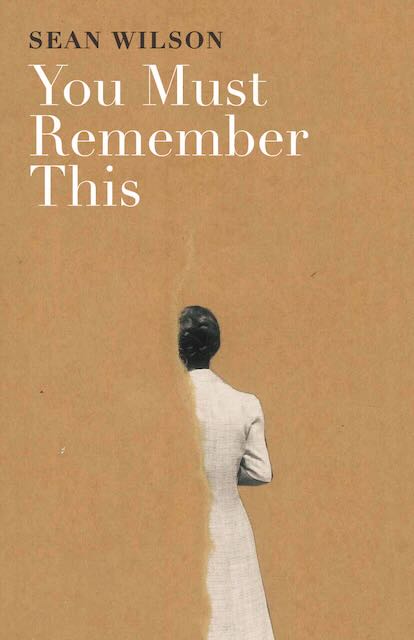
Grace can’t quite make things fit together in her head. Memories from all different parts of her life come and go, and when she snaps back to the present she doesn’t know where she is or how she got there. And where’s Harold, her husband?
The novel opens with Grace in her nightgown, walking beside a yellow line painted on the ground. Then a light from above shines down on her. The reader soon realizes that Grace has been wandering and the police have finally found her walking down the middle of the highway.
This opening chapter of the novel is numbered 10. Because I was reading the book on my Kindle, I thought I had somehow hit the wrong link and jumped ahead. But no, the first chapter really is 10. The second chapter is 7.
This narrative structure effectively demonstrates what dementia must feel like from the inside. The chapter numbers indicate from what phase of Grace’s life a memory originates, while the lack of chronological order in the telling mimics the disorienting chaos of her mind at work.
I wish that Grace’s adult daughter, Liz, could read this novel. It might help dampen her unbridled exasperation with her mother’s actions and statements with some compassion for how this disease affects its patients.
© 2026 by Mary Daniels Brown
