

The penultimate stop on our trip (before disembarkation in London) was Dover in Kent, England. This port city faces France across the Strait of Dover. Although there’s evidence that people lived in the area during the Stone Age and the Iron Age, the port city of Dover blossomed when the Romans made it the center of their exploration of the area.
From Dover, we took the trip to Canterbury, a 30-45 minute bus ride away over the same road established by the Romans. Canterbury flourished because it was about half way between Dover, on the coast, and London.
As soon as we arrived at Canterbury Cathedral, I went in search of the Chaucer statue.
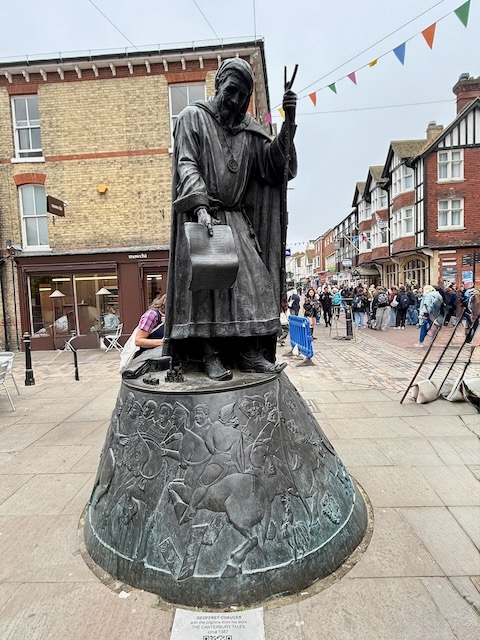
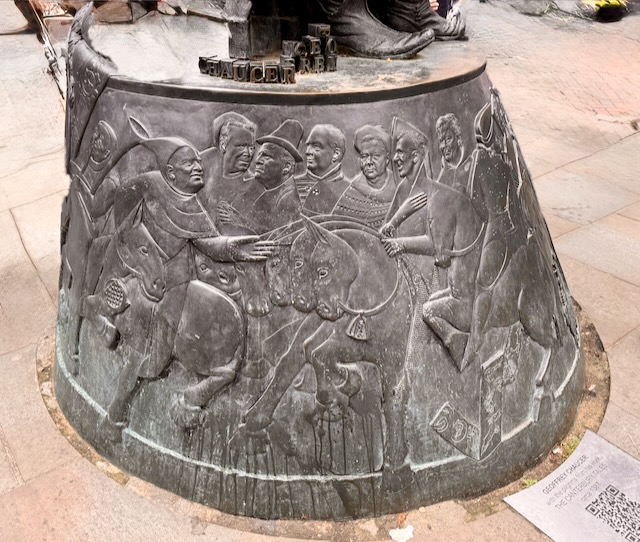
The Chaucer statue celebrates the importance of Geoffrey Chaucer as instrumental in making English a language of great literature. Chaucer’s masterpiece, The Canterbury Tales, was the first book printed in English. Sam Holland, a figurative sculptor, created the statue of Chaucer leading a band of pilgrims to Canterbury Cathedral. Lynne O’Dowd, who specializes in sculpting bas-relief, created the plinth, featuring the pilgrims, upon which Chaucer stands. The work was unveiled on October 12, 2016.
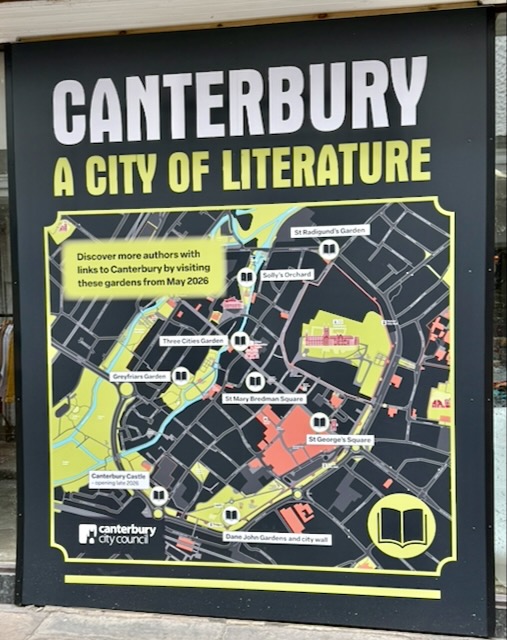
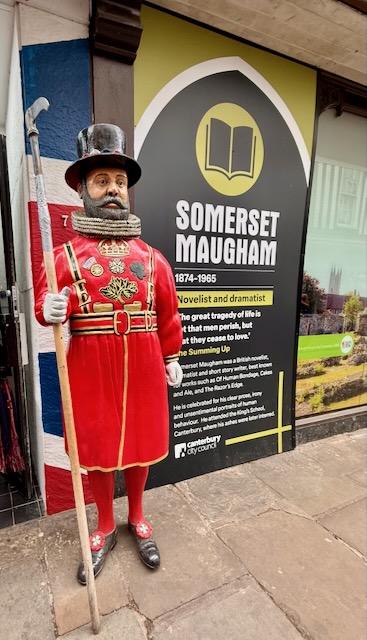
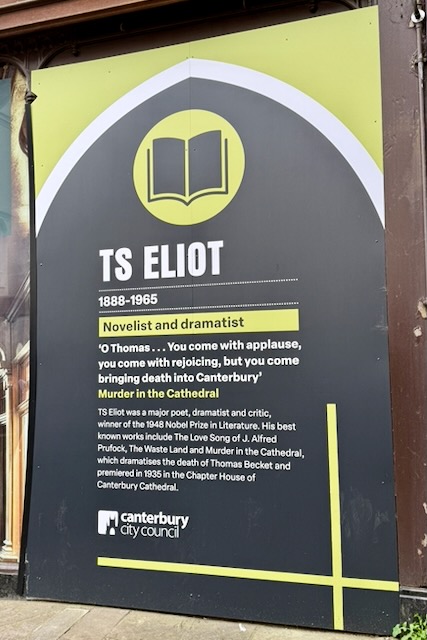
Canterbury is proud of its literary heritage:
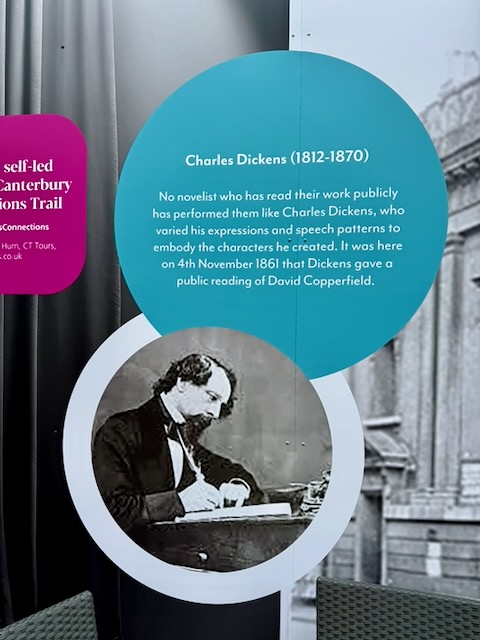
Charles Dickens
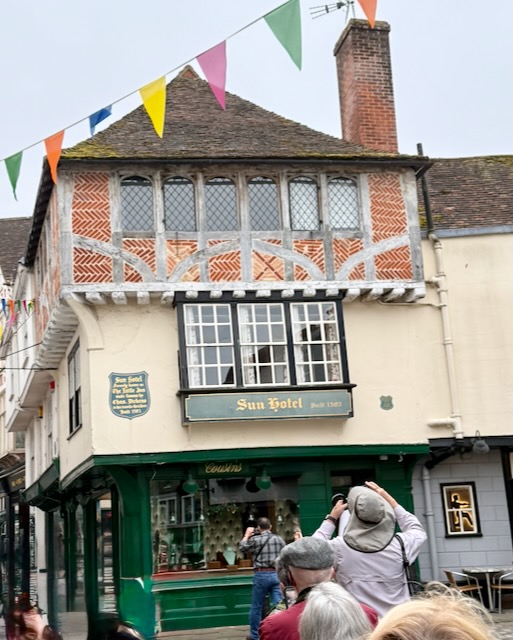
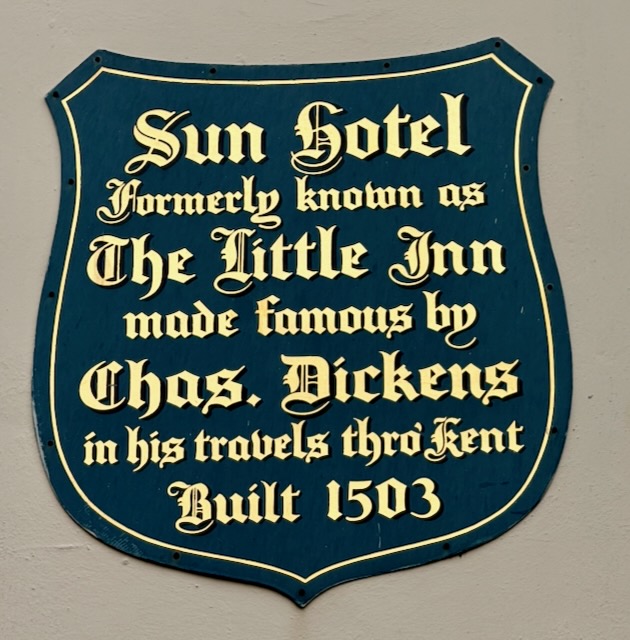
Aphra Behn
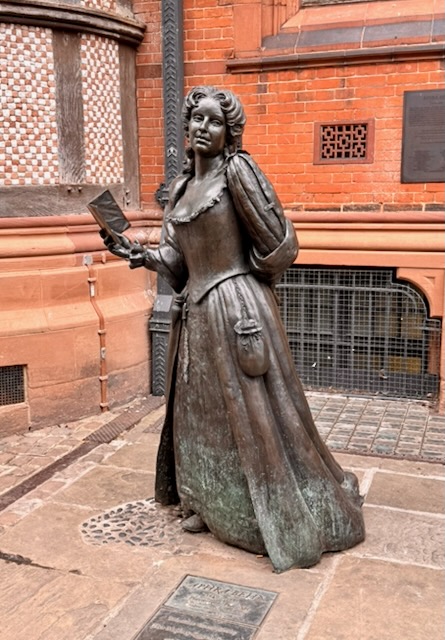
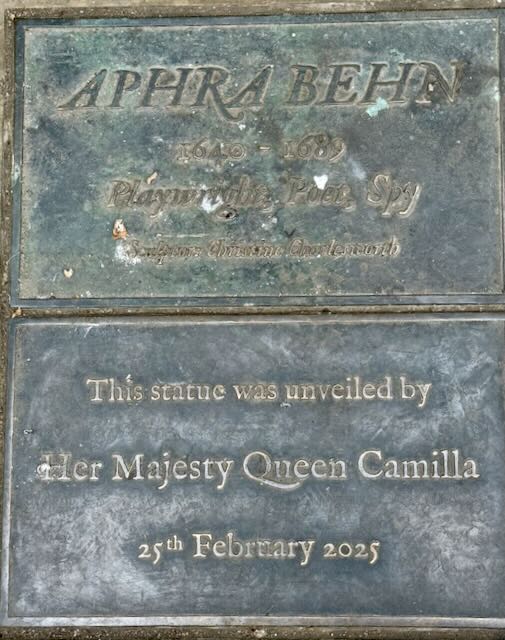
Aphra Behn (1640-1689) was an English playwright, poet, prose writer, and translator who was employed as a spy by King Charles II. According to Wikipedia, “As one of the first English women to earn her living by her writing, she broke cultural barriers and served as a literary role model for later generations of women authors.”
Somerset Maugham & T.S. Eliot
© 2026 by Mary Daniels Brown
