

I don’t write fiction, but I do read a lot of it. All that reading has made me think that the very first question fiction writers must ask themselves is Whose story is this to tell?
Writer Elaine Hsieh Chou suggests a similar thought in a recent interview:
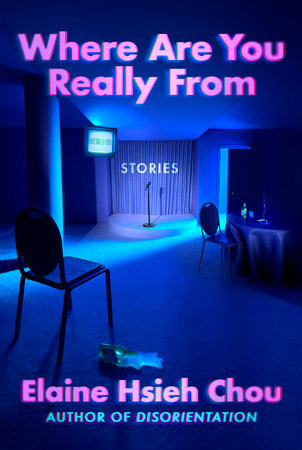
I’m curating the experience I want the reader to have, which is so crucial to think about as a writer. It is not just a question of, “I want to tell this story, so I’m just going to start telling it from this POV.” Considering what experience you want to take the reader on, and how the actual structure and point of view of the story informs that experience? I think that’s so necessary.
And Chou’s quotation further suggests that examining point of view is a good way for readers to begin considering the experience the writer wants to take them on.
Thanks to these two bloggers for sponsoring the annual Blog Discussion Challenge:
- Nicole at Feed Your Fiction Addiction
- Shannon at It Starts at Midnight
I also find the consideration of the experience the writer wants to take the reader on an interesting one. I stand on pretty firm ground when analyzing my experience of reading the fictional work. But how am I to know what reading experience the writer had in mind while writing? And if I can’t know what the writer had in mind, how do I determine whether the writer has accomplished the intention? Even if writers state their intentions (for example, in an interview or essay) with a particular work, should I evaluate the work (decide how many stars to give it) on the basis of how well the author fulfilled that intention or of how the reading of the work affected me?
Reading books and blogging about them sure are complicated.
© 2025 by Mary Daniels Brown

My answer to the following question is the former.
“with a particular work, should I evaluate the work (decide how many stars to give it) on the basis of how well the author fulfilled that intention or of how the reading of the work affected me?”
Thank you for your answer, Liz, which I tend to agree with. I think another way of saying the same thing (or at least something similar) is to say a reviewer should meet the book on its own terms. (As an obviously basic example, it’s not fair of me to criticize a novel for being a romance because I don’t like romance novels.)
Oh heck, I’m not trying to be anonymous. I’m not sure why this sometimes happens.
Exactly! I want to approach each book on its own terms. To do otherwise is unfair to the book and unfair to the author.