Because I like alliteration, for many years I have conducted my own Nonfiction November reading. It was only recently that I discovered Nonfiction November is actually a thing, with its own prompts and discussion challenges. Last year, for the first time, I participated in the formal program of Nonfiction November.
As much as I enjoyed participating and learned from the experience, this year I decided to go back to doing my own thing because I’ve focused this year on the topic of Life Stories in Literature.
Here are the 3 books I read on this topic this November.
The Anatomy of Story by John Truby
- Farrar, Straus & Giroux, 2008
- ISBN 978-0-865-47993-7
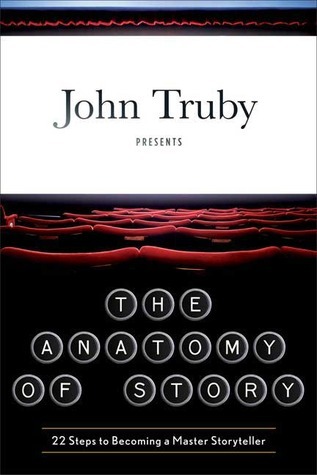
This book is written for writers, particularly screenwriters, with some nods toward fiction writers. Although I don’t write fiction, I often benefit from reading writing books because their information helps me as a reader identify and evaluate important aspects of novels.
There is a lot of information here, and Truby emphasizes—often annoyingly so—translating his advice into formulas. However, I’ve given the book a high rating because of one element that I found particularly pertinent, Truby’s inclusion of fiction’s moral element.
Specifically, for creating characters, Truby discusses two types of motivation: psychological motivation—the character’s personal drive for taking action—and moral motivation, which pertains to how the character relates to acts toward society. Since the development of a life story involves the individual’s creation of both a personal (individual) identity and an understanding of how that personal identity fits (or doesn’t fit) into the larger society, this moral element figures centrally into the study of life stories in literature.
I think Truby is here using the term moral in its most general sense, involving peoples’ relationships with other people, rather than any particular social or religious set of moral constructs. But even if I’m misconstruing his meaning, he’s given me a new way to think about the moral elements of how fiction functions.

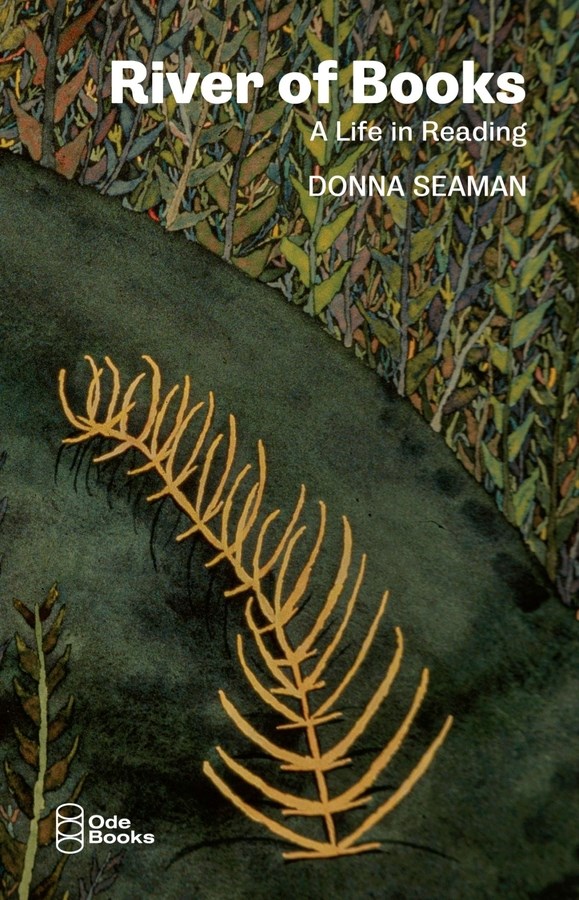
River of Books by Donna Seaman
- Ode Books, 2024
- ISBN 978-1-734-64356-5
Reading is intimate and communal, enlightening and sustaining. Season by season, through storms and drought, reading helps us navigate the river of life. Dear Reader, read on.
Donna Seaman, an editor for Booklist and a book reviewer, chronicles how books have nourished her throughout her life and career. She mentions specific books that were important at various times and includes a list of such books at the end. Anyone who also enjoys reading and appreciates books will find much reinforcement here—and will probably also discover several additions for the TBR list.
Stories Are Weapons by Annalee Newitz
- W. W. Norton & Company, 2024
- ISBN 978-0-393-88151-6
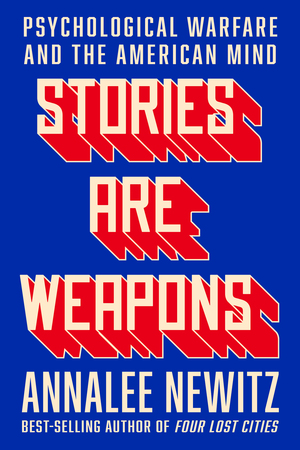
Annalee Newitz digs deep into the history of America’s weaponization of the power of stories, from Benjamin Franklin’s fake newspaper during the Revolutionary War, through Soviet-era brainwashing processes, and into current machinations of political disinformation.
We read a lot today about the power of storytelling, but abuse of that power for personal and political gain has telling and lasting effects. Newitz explains how governments and corporations use storytelling to subvert truth and to silence the voices of minorities and others who disagree with them. She consults Indigenous, feminist, and LGBTQ+ activists and archivists currently at work to counter the historically inaccurate narratives of social and political dominance dressed up as national, natural progress.
This book is necessary reading material for everyone concerned with the current political situation both in the U.S. and worldwide.
© 2025 by Mary Daniels Brown
